Overview
Formulas are created in the Formula Designer and can be used to calculate, transform, or return values throughout the Decisions Platform. A Formula can use constants, variables, and functions to perform calculations in a format similar to spreadsheet formulas.
The Formula Designer provides the tools needed to name the Formula, define optional input data, build the Formula expression, and validate the result. Functions can be selected from the Functions list or typed directly into the Formula Builder, where they auto-populate as they are entered.
Input data is optional, but it can be used when the Formula needs to reference values passed from a Flow or another part of the platform. The Formula Builder also uses color indicators to identify functions, constants, and variables, making the expression easier to read and troubleshoot.
Create a Formula
Follow the next steps to create a Formula:
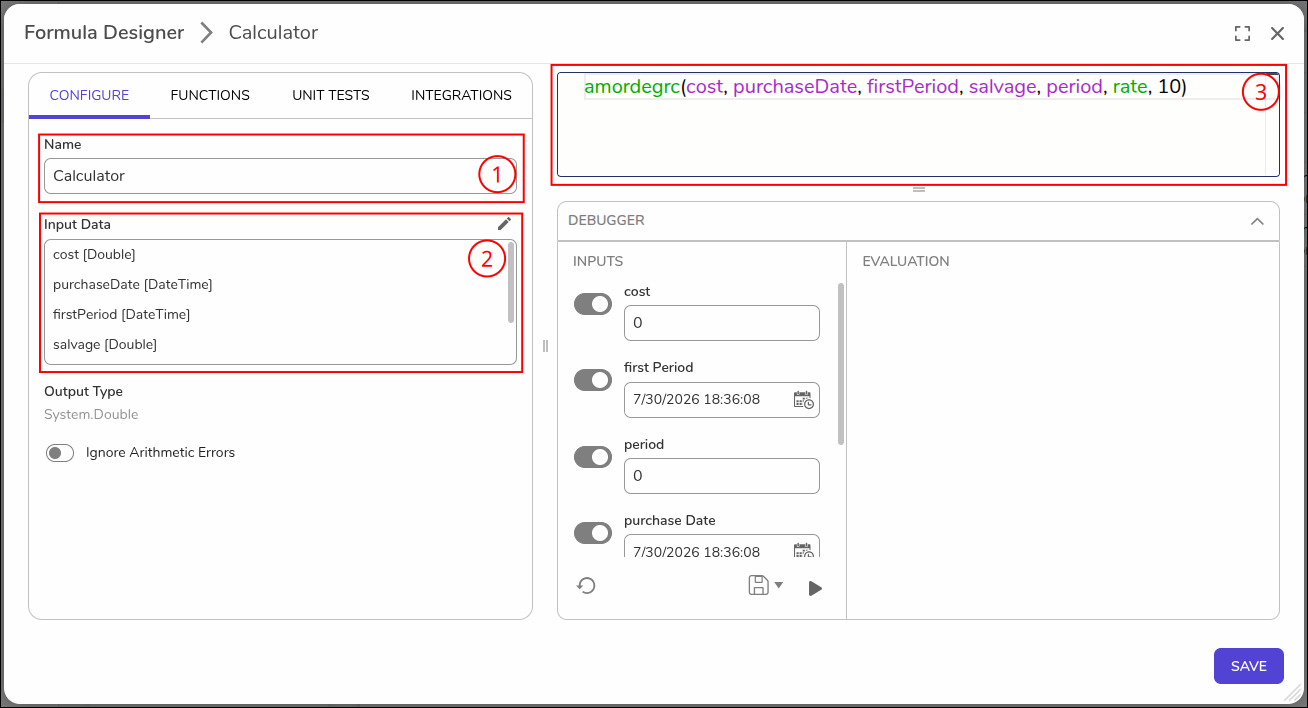
- Provide a name for the Formula. A name is required for every Formula.
- Use Input Data when the Formula needs to reference values created or passed in from a Flow. Input Data is optional. For more information about Input Data, see Configure Input Data.
- Enter the Formula in the Formula Builder. Functions can be added in either of the following ways:
- Select a function from the Functions list. For more more information about functions, see Function Glossary.
- Type the function directly in the Formula Builder. Functions auto-populate as they are entered.
Formula Color Indicators
The Formula Builder uses color indicators to identify different value types:
amordegrc(cost, purchaseDate, firstPeriod, salvage, period, rate, 10)
| Color | Description | Example |
|---|---|---|
| Green | Function | amordegrc |
| Black | Constant | 10 |
| Purple | Variable | purchaseDate |
Variable Data Types
Variables require compatible data types. For example, a variable with a Double data type does not accept letters.
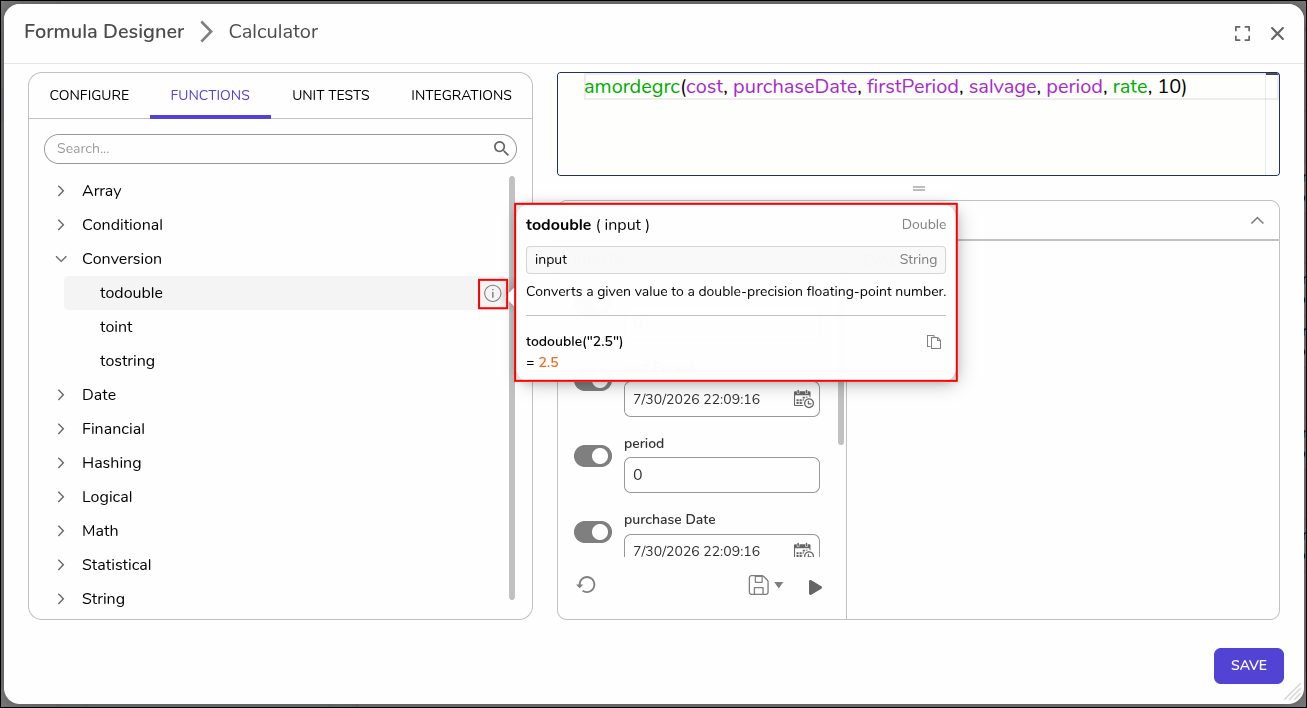
To review the required data type for a function:
- Open the Functions tab.
- Select the function.
- Click the Help icon.
- Review the required input and data type information.
Function Dependencies
Some functions require another function or setting to work correctly.
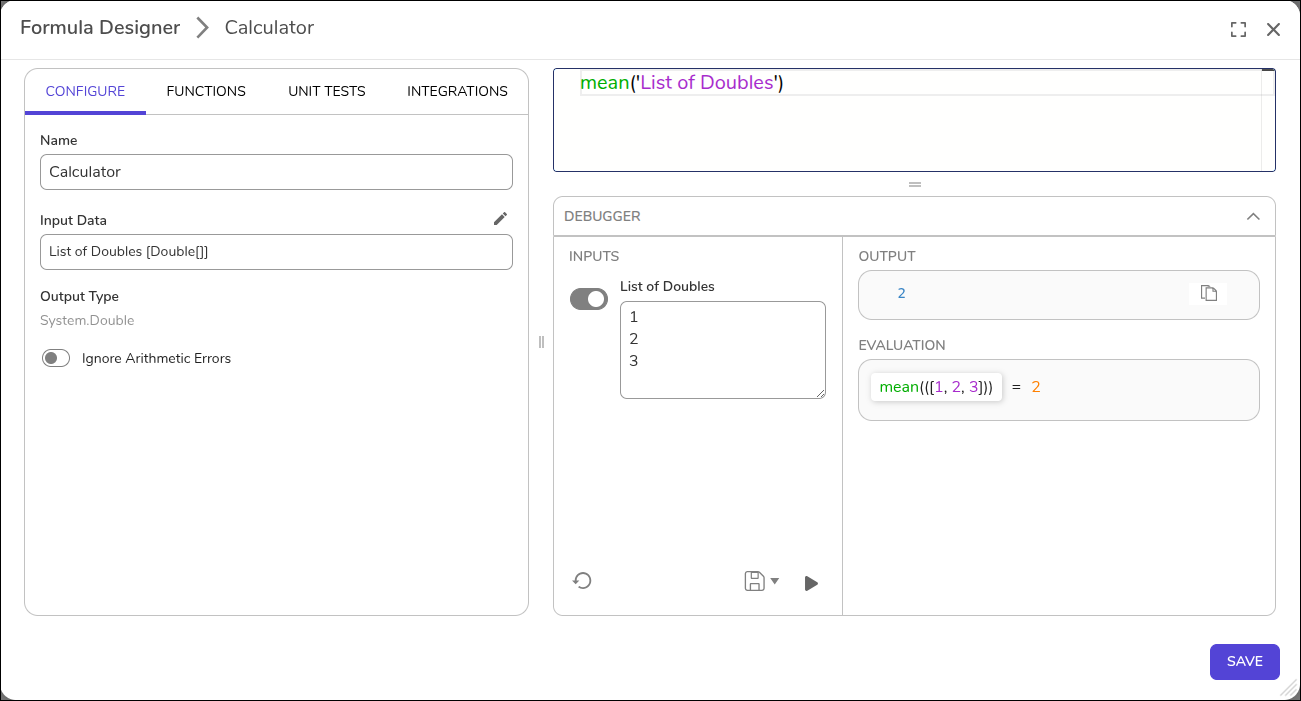
For example, functions that use lists may require one of the following:
- The Make Array function.
- The Is List setting enabled for the input data.
Configure Input Data
Use Input Data to define the values a Formula can receive and use during execution.
- Do one of the following:
- Click the pencil icon next to Input Data to open the Input Data screen.
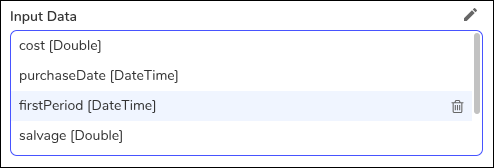
- If it is a new Formula, click the plus icon next to Input Data to open the Input Data screen.

- Click the pencil icon next to Input Data to open the Input Data screen.
- The Input Data screen follows the same configuration pattern used throughout Decisions for creating and managing data definitions.
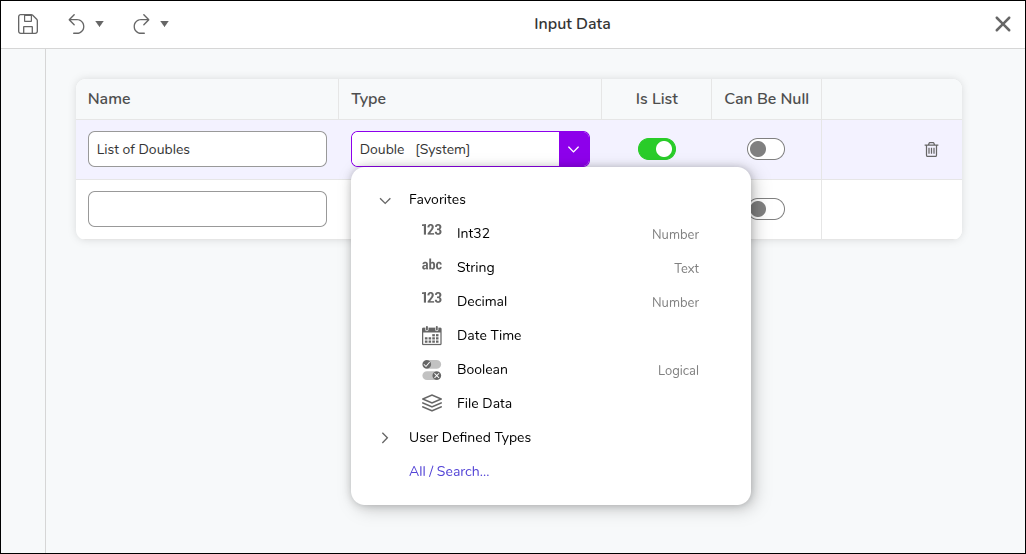
- The default data type is Double, because this type is commonly used with Formula functions. This can be changed to any standard Decisions data type or to a custom data type.
- Enable Is List when the input must accept multiple values. This setting is required for certain functions that work with list-based data.
- Enable Can Be Null when the input value may be empty or null.
- Click the Save icon at the top bar.
Feature Changes
| Description | Version | Release | Developer Task |
|---|---|---|---|
| The Formula Designer UI has been updated to reflect the redesigned platform experience, including updated hover states. | 10.1 | August 2026 | [DT-047859] |